Campaign Timing & Embargoes
Campaign timing controls when creators can discover your campaign, access its resources, publish content, and submit videos.
These moments don't all have to happen at the same time. In fact, publishing your campaign before creators are allowed to post can give them time to discover the opportunity, express interest, access your game, and prepare better content ahead of your marketing beat.
Understanding the campaign timeline
There are four important moments to understand:
Campaign published
Once Campaign Review is complete, the Jestr team can publish your campaign.
Publishing makes the campaign visible to eligible creators, but it does not necessarily mean creators can begin making or posting content yet.
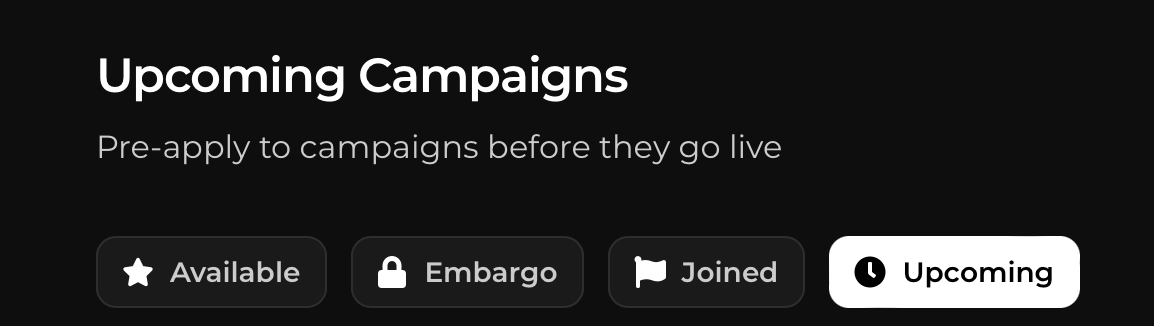
Depending on your campaign dates, a published campaign may appear as Upcoming, Embargoed, or Active.
Publishing early gives eligible creators more time to discover your campaign and express interest before content begins going live.
For more information on exactly who can see your campaign at each stage, see Campaign Visibility.
Start date
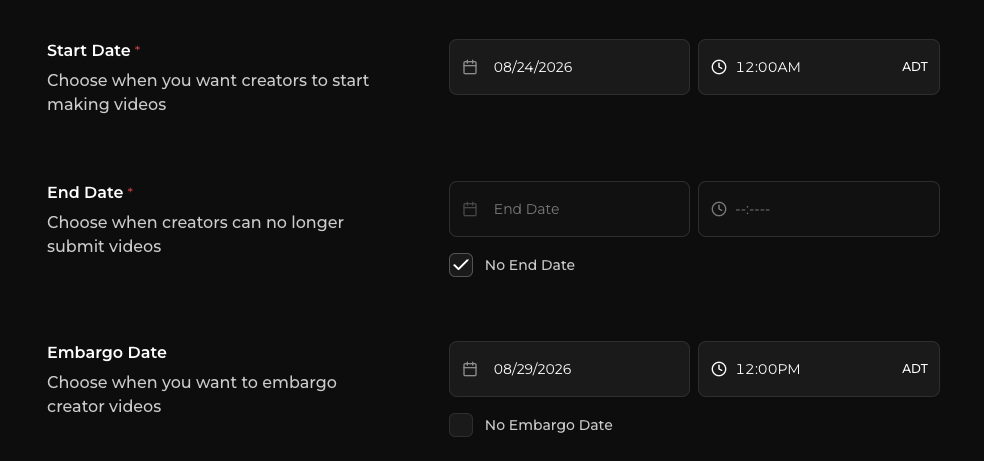
Your start date determines when creators can begin participating in the campaign and accessing its creator resources.
Before the start date, creators may be able to discover and pre-sign up for the campaign, but campaign resources such as game keys, footage, and other restricted materials aren't yet accessible.
Once the start date arrives, eligible creators can access these resources and begin preparing content.
Embargo date
If your campaign has an embargo, the embargo date determines when creators are allowed to publicly post their content.
Between the start date and embargo date, creators can access the campaign, play the game, use your resources, and prepare videos — but their content must remain private until the embargo lifts.
An embargo is optional. If your campaign doesn't need one, creators can begin publishing once the campaign is available to post.
For confidential campaigns, you can also combine an embargo with an NDA to restrict what creators can see before agreeing to confidentiality terms.
Learn more about NDAs in Campaign Visibility.
End date
Your end date determines when creators can no longer publish or submit new content to the campaign.
End dates are optional. It's common for studios running ongoing awareness campaigns to leave their campaign open without a set end date, allowing creators to continue discovering the game and producing content over time.
If you do set an end date, Jestr includes an additional 48-hour tracking buffer after the campaign ends. This gives content submitted near the deadline additional time to accumulate eligible views before campaign rewards are finalized.
For more information on how this affects your final campaign spend, see Active Campaigns.
Upcoming campaigns & pre-signups
If your campaign has been published but its start date hasn't arrived yet, eligible creators can pre-sign up to express their interest.
Pre-signing up doesn't commit a creator to making content. It simply indicates that they're interested in participating once the campaign begins.
This can be useful when you want to start building creator interest before everything is ready.
For example, you may still be preparing game keys, footage, or other campaign resources. Rather than waiting to publish the campaign, you can publish it as Upcoming and begin collecting creator interest in advance.
Giving creators time to prepare
Whenever possible, we recommend giving creators time between receiving access to your game and being expected to publish.
A common setup might look like:
Campaign published → Creators discover and pre-sign up
Start date → Creators receive access and begin making content
Embargo date → Prepared content can go live
End date → New submissions close, if applicable
As a general rule, having your start date earlier than your embargo date gives creators time to actually experience your game and prepare content rather than rushing to publish immediately.
When possible, giving creators at least a week between access and the embargo lifting can provide a useful preparation window.
Your exact timeline will depend on the campaign. Announcements, playtests, demos, launches, and ongoing awareness campaigns may all benefit from different timing.
What creators can see at each stage
Timing and visibility are closely connected.
Whether a creator can discover an upcoming or embargoed campaign depends on their creator type and your campaign's visibility settings. NDA-protected campaigns can further restrict what information becomes available before creators agree to confidentiality.
For a complete breakdown of who can see and access your campaign, continue to Campaign Visibility.